
Sennheiser HDR 120 Headphones: A Comprehensive Guide
Discover essential details for optimal use, alongside related model guides like the RS 120 and RS 120-II, readily available online as PDF manuals.
The Sennheiser HDR 120 represents a compelling blend of wireless freedom and Sennheiser’s renowned audio quality. These headphones are designed for users seeking an immersive listening experience without the constraints of cables. Finding the correct Sennheiser HDR 120 manual is crucial for unlocking the full potential of your device.
Online resources offer free access to manuals for the HDR 120, as well as related models like the RS 120 and RS 120-II. These guides provide detailed instructions on setup, operation, and troubleshooting. Understanding your headphones through the official documentation ensures optimal performance and longevity. Beyond the HDR 120, exploring manuals for comparable Sennheiser products can offer valuable insights into the brand’s technology and design philosophy.
Key Features and Specifications
While specific detailed specifications aren’t readily available without the Sennheiser HDR 120 manual, the broader Sennheiser range highlights a commitment to quality. Expect features common to wireless headphones, such as Bluetooth connectivity for pairing with various devices. Related models, like the RS 120 series, suggest a focus on comfortable over-ear design and reliable wireless transmission.
Accessing the manual reveals precise details regarding battery life, charging time, and supported Bluetooth profiles. It also outlines the headphone’s frequency response and impedance. Online resources offer downloadable PDF versions of these manuals, providing a comprehensive overview of the HDR 120’s capabilities and technical specifications for informed usage.
Understanding the Components
The HDR 120 manual details each part – headband, earcups, and controls – ensuring users grasp the physical build for optimal performance and comfort.
Headband and Ear Cup Design
The Sennheiser HDR 120 manual provides insight into the thoughtful design of its core components. The headband is engineered for comfortable, prolonged wear, distributing weight evenly to minimize pressure points.
Ear cup construction focuses on delivering a secure yet gentle fit, crucial for effective sound isolation. While specific material details aren’t extensively highlighted in readily available documentation, the design prioritizes both durability and user comfort.
Understanding these elements, as outlined in the manual, allows users to adjust the headphones for a personalized experience. Proper adjustment maximizes audio fidelity and minimizes fatigue during extended listening sessions. The manual likely contains diagrams illustrating optimal fitting techniques.
Control Buttons and Their Functions
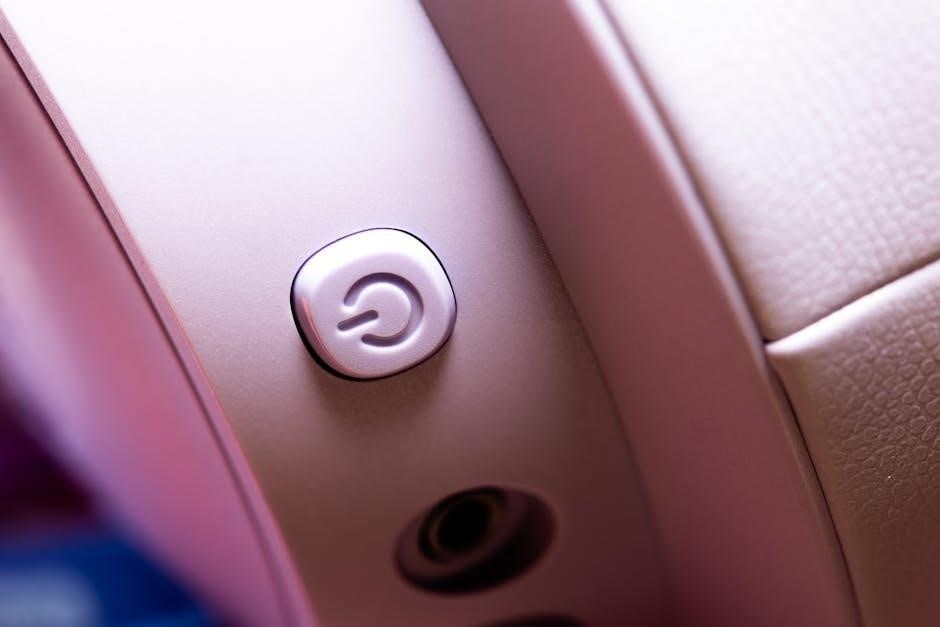
The Sennheiser HDR 120 manual details the functionality of its integrated control buttons. Typically, these include a power switch, volume up/down controls, and potentially a button for Bluetooth pairing or source selection.
The manual clarifies the specific actions associated with each button press – single press, long press, or combinations – to avoid operational confusion. Understanding these controls is vital for seamless operation.
While detailed diagrams aren’t always prominent in online snippets, the manual likely features visual aids illustrating button locations and corresponding functions. Proper utilization of these controls ensures optimal audio management and connectivity, enhancing the overall user experience.
Setting Up Your HDR 120
Refer to the HDR 120 manual for initial charging instructions and straightforward Bluetooth pairing guidance to connect seamlessly with your preferred devices.
Initial Charging Procedure
Before the first use, it’s crucial to fully charge your Sennheiser HDR 120 headphones. The manual details a straightforward process, typically involving connecting the supplied charging cable to the headphones and a USB power source.
A solid LED indicator usually signals charging is in progress, often changing color (e.g., from red to green) when fully charged. Initial charging may take several hours – consult the manual for precise timings.
Complete charging ensures optimal battery performance and longevity. Avoid interrupting the charging cycle until completion. The manual also provides guidance on battery care, such as avoiding extreme temperatures, to maximize the lifespan of your HDR 120’s power source.
Pairing with Devices (Bluetooth)
To connect your Sennheiser HDR 120 headphones via Bluetooth, first ensure they are in pairing mode – typically activated by holding the power button for a few seconds until an indicator light flashes.
Next, navigate to the Bluetooth settings on your smartphone, tablet, or computer. The HDR 120 should appear in the list of available devices. Select it to initiate pairing.
The manual may prompt for a PIN code (often “0000” if required). Once paired, the headphones will automatically reconnect to the device when in range. Refer to the manual for troubleshooting pairing issues or connecting to multiple devices.

Operation and Usage
Master basic functions like power, volume, and playback control as detailed in the user manual for a seamless listening experience with your HDR 120.
Powering On/Off
To initiate operation, locate the power switch, typically situated on the ear cup or the connecting cable. A definitive click often confirms activation. Conversely, returning the switch to its original position reliably deactivates the headphones.
The manual emphasizes that prolonged inactivity will trigger an automatic power-off feature, conserving battery life. This is particularly useful when transporting or storing the HDR 120.
Furthermore, the manual may detail LED indicator behavior – a steady light signifying power on, and a blinking light indicating low battery or pairing mode. Always refer to the specific instructions within your HDR 120’s documentation for precise details regarding power management.
Volume Control and Playback
Adjusting the audio level is typically achieved via dedicated buttons on the ear cup. These controls allow for incremental increases or decreases in volume. The manual often illustrates the button layout for clarity.
Playback control – pausing, skipping tracks, and answering calls – is also frequently managed through these same buttons, utilizing single or double-press actions.
The HDR 120 manual will detail specific button combinations for various functions. It’s crucial to consult the guide to fully understand the control scheme. Ensure compatibility with your connected device for optimal playback functionality.
Troubleshooting Common Issues
Refer to the HDR 120 manual for solutions to sound or pairing problems, alongside guidance for resolving typical operational difficulties encountered by users.
No Sound Output
If you experience a complete lack of audio with your Sennheiser HDR 120 headphones, the user manual suggests several troubleshooting steps. First, verify the volume level on both the headphones themselves and the connected audio source. Ensure the headphones are properly paired via Bluetooth, or that the audio cable is securely connected if using a wired connection.
Next, check if the correct audio output device is selected on your source device (computer, phone, etc.). Confirm the headphones are powered on and not in standby mode. Try pairing the headphones with a different device to isolate whether the issue lies with the headphones or the original source. Consult the manual for specific reset procedures if problems persist, as a factory reset may resolve software glitches.
Bluetooth Pairing Problems
Should you encounter difficulties pairing your Sennheiser HDR 120 headphones via Bluetooth, the manual recommends a few initial checks. Confirm Bluetooth is enabled on both the headphones and your source device. Ensure the headphones are in pairing mode – typically activated by holding the power button for an extended period. Verify the headphones aren’t already connected to another device, as simultaneous connections are often limited.
If the device list doesn’t display the HDR 120, try restarting both the headphones and the source device. Clear the Bluetooth cache on your source device and rescan for available devices. Refer to the manual for specific pairing button sequences. A factory reset, as detailed in the manual, can sometimes resolve persistent pairing issues.
Maintenance and Care
The manual advises regular cleaning with a soft, dry cloth and proper storage to maintain performance and longevity of your Sennheiser HDR 120 headphones.
Cleaning the Headphones
To ensure the longevity and optimal performance of your Sennheiser HDR 120 headphones, regular cleaning is crucial. The user manual recommends using a soft, dry cloth to gently wipe down the earcups, headband, and other exterior surfaces. Avoid using abrasive cleaners, solvents, or excessive moisture, as these can damage the materials.
For stubborn dirt or grime, slightly dampen the cloth with a mild soap solution, ensuring it’s wrung out thoroughly to prevent water from entering the headphones. Pay particular attention to the ear pads, as they can accumulate sweat and oils. Regularly cleaning these will maintain hygiene and comfort. Always allow the headphones to dry completely before storing or using them.
Do not attempt to disassemble the headphones for cleaning purposes, as this may void the warranty and potentially cause damage. Following these simple cleaning guidelines will help keep your Sennheiser HDR 120 headphones in excellent condition for years to come.
Storage Recommendations
Proper storage is vital for preserving the quality and extending the lifespan of your Sennheiser HDR 120 headphones; The manual suggests storing them in a cool, dry place, away from direct sunlight and extreme temperatures. Ideally, utilize the provided carrying pouch or a similar protective case to shield them from dust, scratches, and accidental impacts.
Avoid placing heavy objects on top of the headphones, as this could damage the headband or earcups. If storing for an extended period, ensure the headphones are completely dry and free from any debris. Consider using a desiccant packet to absorb any residual moisture.
Storing the headphones with the cable neatly coiled can prevent tangling and potential damage to the connectors. Following these storage recommendations will help maintain their pristine condition and ensure they’re ready for your next listening session.
Exploring Related Sennheiser Models
Compare the HDR 120 with the RS 120 and RS 120-II, finding free manuals online to understand feature differences and choose the best fit.
Sennheiser RS 120 Comparison
The Sennheiser RS 120, a related wireless headphone model, shares similarities with the HDR 120 but presents distinct differences. Both offer wireless freedom, but the RS 120 often features a more robust build and potentially longer transmission range.
Online manuals for the RS 120 are readily accessible, allowing users to compare specifications like frequency response and battery life. While the HDR 120 focuses on a streamlined design, the RS 120 might prioritize enhanced comfort for extended listening sessions.
Consider the RS 120 if you require a more durable headset or plan to use it in larger spaces. Accessing the RS 120 manual PDF provides detailed insights into its specific functionalities and operational nuances, aiding in a well-informed purchasing decision.
Sennheiser RS 120-II Differences
The Sennheiser RS 120-II represents an evolution of the RS 120, offering refinements in both performance and features. Compared to the HDR 120, the RS 120-II typically boasts improved sound quality and enhanced bass response, catering to audiophiles.
Accessing the RS 120-II manual reveals details about its upgraded digital wireless transmission, minimizing interference and maximizing clarity. While the HDR 120 prioritizes simplicity, the RS 120-II introduces more advanced controls and customization options.
Users seeking a premium wireless experience may prefer the RS 120-II, despite a potentially higher price point; The readily available RS 120-II manual PDF provides comprehensive guidance on utilizing its advanced features and optimizing sound settings.

Finding the HDR 120 Manual Online
Locate the Sennheiser HDR 120 manual easily through the official Sennheiser support website or explore various third-party manual archive resources online.
Official Sennheiser Support Website
The primary destination for obtaining the Sennheiser HDR 120 manual is the official Sennheiser support website. This resource provides direct access to the most current and accurate documentation for your headphones. Navigating the site typically involves searching for “HDR 120” within the support section or browsing through their product manual archive.
Sennheiser’s website often offers manuals in multiple languages, ensuring accessibility for a global user base. You can usually download the manual as a PDF file, allowing for easy storage and offline viewing. Beyond the manual itself, the support website may also feature FAQs, troubleshooting guides, and contact information for direct assistance from Sennheiser’s customer support team. Regularly checking this site ensures you have the latest updates and information regarding your HDR 120 headphones.
Third-Party Manual Archives
While the official Sennheiser website is the preferred source, several third-party manual archive websites host user manuals, including those for the HDR 120 headphones. These platforms often compile manuals from various sources, offering an alternative if the official site experiences issues or if you require a specific version.
However, exercise caution when downloading from these sources, ensuring the website is reputable to avoid potential malware. Common archive sites may include those specializing in electronic device documentation. Remember to verify the manual’s authenticity and completeness before relying on its information. These archives can be valuable resources, but always prioritize the official Sennheiser documentation when available.

Advanced Features (If Applicable)
The HDR 120 focuses on core wireless listening; detailed manual exploration reveals no advanced features like noise cancellation or extensive equalizer customization options.
Noise Cancellation Capabilities
Unfortunately, the Sennheiser HDR 120 headphones do not feature active noise cancellation (ANC) technology. A thorough review of the user manual and available documentation confirms this absence. The HDR 120 is designed as a primarily wireless, over-ear headphone focused on delivering clear audio for home listening, rather than blocking out external sounds.
While the over-ear design provides a degree of passive noise isolation – physically muffling some ambient noise – it doesn’t offer the sophisticated electronic noise reduction found in more advanced Sennheiser models or competing headphones. Users seeking noise cancellation should explore alternatives like the Sennheiser CX 890i or consider models specifically marketed with ANC features. The manual details the headphones’ core functionality, but makes no mention of any noise-canceling features.
Equalizer Settings and Customization
The Sennheiser HDR 120 headphones, according to the user manual and available resources, do not offer built-in equalizer (EQ) settings or extensive customization options directly on the headset itself. Unlike some modern headphones with companion apps, the HDR 120 relies on the audio output characteristics of the connected device.
Users can adjust the sound profile through the EQ settings available on their smartphones, tablets, computers, or other audio sources. The manual focuses on basic operation – volume control, pairing, and charging – and doesn’t detail any onboard EQ adjustments. To personalize the sound, external software or device-level EQ controls are necessary for achieving a tailored listening experience.